
An Examination Of Condensation In Vehicle Dwelling
- Dennis Alex

- Oct 26, 2021
- 5 min read
Updated: Nov 29, 2021
Condensation is a common topic on vehicle dwelling forums, running the gamut of dwellings sized from very large RV’s, all the way down to mini-van sized campers. There are also a good number of misconceptions throughout the comment threads.
Why it’s a challenging topic is because, as simple as it might seem at the surface, there are quite a few moving parts involved. These only become apparent when we peel back a few layers to take a deeper look. It’s here that what becomes apparent, is that from person to person, an individual’s personal experience with condensation can vary quite a bit.

The basics are simple enough to anyone who’s pulled out a cold drink in hot weather. The container of that cold drink will sweat. Warm air hitting a cold object surface equals liquid moisture forming. But, how this fully relates to a living space, is dependent on so many different details.
Let’s dive in by illustrating a comparison between an average “sticks n’ bricks” home, to a minivan customized to be a live-in camper.
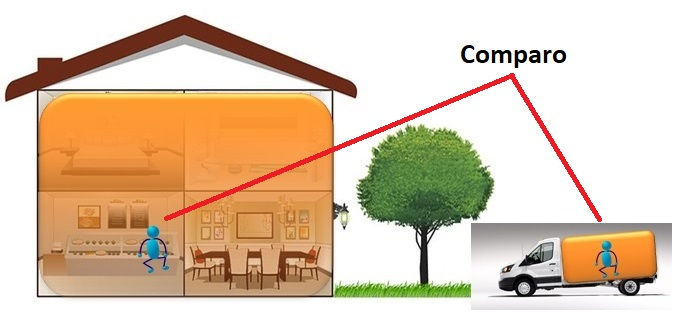
Stats on average:

No one would question there is a big difference between the two spaces, but EXACTLY HOW BIG isn’t frequently realized. The takeaways from these stats are that:
· Space: A small minivan camper is only a small fraction of the interior space of an average sized residential home (130 minivan cargo areas can fit into an average home).
· Temperature Fluctuation: While homes are generally temperature controlled, the minivan constantly has huge temperature swings – from ambient to 40 degrees above ambient, simply from a vehicles “greenhouse effect” of trapping sun produced heat. In a home, not only is the air temperature relatively constant, but so is the temperature of all of its contents. Not so in a vehicle space, where the contents can be at widely different temperatures in relation to the air.
· Relative Humidity: The impact of a person sitting at rest, hardly influences a home space, because the impacts have such a large area to disperse into. It dramatically impacts a much smaller area. Simply by breathing, the expelled air is near 97F degrees at near 100% humidity. This equates to a cup of liquid water over 8 hours, and increases a small spaces overall humidity levels quickly. Couple that with close proximity breathing settling on cold interior contents, and even if the moisture isn’t visibly collecting, everything in the small space becomes damp and clammy.
· Air Exchange: As tight as modern homes are built today, the air exchange rate in a stationary vehicle is 85% tighter. One of the main reasons is that a vehicles air exchange system is designed for an in-motion operation. Homes are generally built to an minimum air exchange of 15 cubic feet per minute. Most of this takes place in minuscule spaces around doors, windows, and vents. Modern vehicle air exchange systems are increasingly tuned on managing roadside air pollution from entering a stationary vehicle (ieo: stopped while waiting for a traffic signal). A modern vehicle can have a stationary air exchange rate as low as only 2.5 cubic feet per minute. To match a home’s air exchange rate in a minivan, would equate to having all of the airspace change over to fresh air about every 10 minutes (about the volume of air a small computer fan pushes).
· Insulation: The minimum standard for an RV per the RVIA is R7, which is only 46% the value of a minimally insulated home wall. Further, homes are designed and built to breath. Any moisture that might accumulate within the insulation has a means to evaporate. Most RV structures insulate without any means for their wall spaces to actively breath. Accumulated moisture then, has no means to readily escape. Colder wall surfaces increase surface condensation risk.
To recap: The many moving parts of condensation occurring in vehicles involve interior objects more likely to have a large temperature variation from the air, colder air holds less moisture, smaller air spaces can’t easily diffuse the impacts produced by a person, and by design, a stationary vehicles air exchange is quite limited. There are even other condensation factors like altitude, barometric pressure, a huge difference in average relative humidity through the countries diverse climate regions, differing sun hours through seasons, and the list can go on. It’s no wonder why condensation experiences vary so widely from person to person.
Q: Why is it important?
A: Condensation is damaging.
Excess moisture accumulation over time, whether it is visible or not, has negative impacts on: Any Organic or Porous material, Electronics (cell phones, computers, Power Monitoring /Controlling systems, Cameras, etc.), Unsealed foods, Medications, Musical Instruments, etc.
But likely the most impactful damage is to an individual’s health through compromised air quality. The same environment conditions that exacerbate accumulated road pollutants, and interior materials off-gassing, also promote mold and fungi growth, both having well documented adverse effects on human health.
Mold and fungi are in the air around us through airborne spores, but their concentrated growth in any one place, produces toxic elements in enough of a concentration to cause harm to people. The basic conditions that promote this concentrated growth are A) Organic matter as food B) Shelter from sunlight C) Ample consistent moisture D) Stagnant air movement
From RV’s to minivans … organic matter is everywhere – there are often many dark sunless nooks/cranny’s – condensation comes easily keeping moisture saturation high – and closed up vehicles have very little inside air exchange/movement. It’s mold heaven.
On the bright side, managing the environment to inhibit condensation/mold habitat is pretty straight-up in two distinct areas: interior design elements, and the activities/actions of living in a small space.
Interior Design Elements:
Minimizing organic materials – substituting synthetics in place of organics like cotton in cloths-upholstery-carpets-curtains, wood, paints, some insulations, non-organic mattress foams, etc.
Minimizing dark spaces – storing items on shelving vs cabinets, in translucent containers vs. dark drawers, translucent roof fans, strategic window installs,
Reducing interior humidity- Committing to having the vehicle open to natural air flow as often as possible - preferably 24/7 (at least one window cracked open always), keeping the occupied space air exchange at least equal to a small computer fan when awake, or at least half of that while asleep, reducing dead air spaces through ventilation holes or a miniature usb fan, etc. Keeping airflow going all day helps reduce moisture accumulated during colder overnight conditions. Daytime warming help a ventilated vehicle dry out.
Interior Activity/Actions:
Removing insulating window covers during daylight, opening cabinets and dressers when the vehicle is idle and unoccupied, keeping the sink dry when unused, opening the lid on a chemical toilet when the vehicle sits idle, using covered drinking cups, hang a damp dish or wash towel outdoors, same with damp shoes, using an airtight container for disposing wet garbage or damp used paper towels or temporarily storing wet rain gear, wiping surfaces down with mold killing cleaner, keeping fabrics from resting on cold interior walls, etc.
In short, one could say keeping things as daylight filled and airy and dry as is possible/practical for your environment, is managing condensation and it's adverse effects.
~ Happy Travels


Comments